
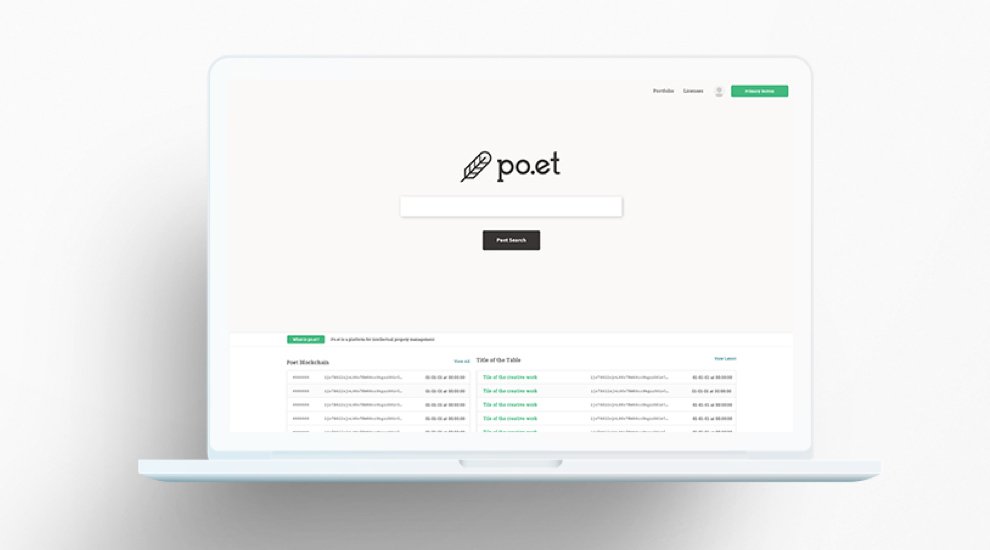
Four leading international publishers working in the blockchain space have decided to partner with new blockchain protocol Po.et.
The Merkle, Crypto Insider, Coinspeaker and ChainB will now use the platform to build a digital history of their writers work.
Po.et is concerned with using blockchain technology and timestamped metadata for attribution and licensing within the digital media industry. This is an important step in solving some of the issues that digital publishers and content creators have with regards to licensing, syndication, attribution and document integrity.
In a blog post, Po.et quotes David Bailey, CEO of their partner BTC Media, who runs through some of the issues:
“The digital media and publishing industry is rife with problems. It is impossible to tell who owns a given piece of content. Once you do, the licensing process is difficult, slow, and inefficient.”
The open ledger the company is trying to build will contain information like:
- original URL
- author
- original publisher
- wordcount
Digital content often lacks a clear way of gaining this vital information, and the metadata can often be altered or removed after original publication. Po.et issues each piece of content a unique badge which authenticates ownership, and ensures that metadata cannot be altered after the fact.
Protected yet open
“We, as a publisher, take great charge of copyright protection and content security. At the same time we want our content to be topical, open to public, understandable and well-structured. It is obvious today that blockchain is the foretype of next gen Internet,” said Coinspeaker CTO & co-founder Egor Pavlovich.
The digital media industry has three core problems when it comes to digital assets:
- who owns the asset?
- who is authorised to use, license or repurpose a particular asset?
- what is the origin of the asset?
Centralised marketplaces like Shutterstock are one attempt to create a hub for licensing and ownership for images. The problem with this model is a lack of interoperability and open information sharing.
The Po.et platform utilises smart contract functionality to help facilitate the distribution of content and creative assets between creators, editors and publishers in a way that doesn’t have to rely on active communication by each party. The company also believes the hashing of metadata will create greater cost efficiencies for its partners.

Interested in hearing leading global brands discuss subjects like this in person? Find out more at the Blockchain Expo World Series, Global, Europe and North America.


