
The global supply chain industry is on the verge of a major shift, with technologies such as blockchain paving the way for paperless operations.
Dale Chrystie, blockchain strategist at transportation, e-commerce and business services specialist, FedEx, has been at the forefront of this transformation, drawing from his extensive experience in global logistics. He believes blockchain and other complimentary technologies are ready to reshape the supply chain landscape.
A global perspective on supply chains
Chrystie says that understanding the future of supply chains requires a broader, more global perspective. He likens this view to observing Earth from the International Space Station.
“At this level, there are no companies, no industries, and no borders. This is the default position for thinking about the transformation of global supply chains,” he notes.
This perspective underscores the interconnectedness of modern logistics, where collaboration across geographies and industries is vital. Supply chains today are no longer constrained by physical limitations but instead depend on digital tools to enable seamless operations.
Blockchain’s role in revolutionising supply chains
FedEx’s blockchain experience began in 2017, with Chrystie leading the company’s initial use of the technology. By 2018, FedEx executives were publicly claiming blockchain’s revolutionary potential.
Chrystie recalls a key moment, explaining: “Our chairman, Fred Smith, said at ConsenSys in New York City that ‘if you’re not operating at the edge of innovation, you need to be prepared to be commoditised or to potentially become extinct.’ Those are pretty strong words, but they reflect the bold vision we had at the time – and still have today.”
Chrystie summarises blockchain with a straightforward definition: “Blockchain is a digital ledger that is permanent, transparent, and shared. It’s like double-entry accounting, but digital. It’s permanent because of cryptography, transparent because transactions are visible to both parties, and shared because it exists in the cloud.”
This clarity is critical, as blockchain’s complexity has frequently prevented widespread understanding. Chrystie believes that simplifying its concept will help the technology gain widespread acceptance.
Harmonising standards for a digital future
A significant challenge in implementing blockchain at scale lies in harmonising global standards. Chrystie notes that there are more than 60,000 standards worldwide, many of which are fragmented and lack interoperability.
He emphasises: “Harmonised and interoperable standards are essential if we want to move forward. It’s about normalising how we consume data at the global level.”
FedEx also discovered that openness is crucial for scaling blockchain technology. Early on, the company developed a proprietary blockchain solution but soon recognised its limitations.
“We built a global supply chain blockchain in 2018, and then we realised we couldn’t scale it because it needed to be open,” Chrystie explains. “It’s going to take all of us – businesses, governments, and individuals – to create an open foundational layer.”
Complementary technologies and their impact
Blockchain is just one part of the jigsaw puzzle. Sensors, AI, and digital identities are all key technologies for modernising supply chains.
Chrystie cites an example from the COVID-19 pandemic, saying: “The Canadian government reached out to us to ensure the highest level of assurance for vaccine shipments. We combined blockchain with sensors to create an immutable record of the shipment’s temperature, location and movement.”
This approach highlights blockchain’s ability to enhance transparency and trust in critical supply chains. Similarly, the concept of digital product passports, particularly in Europe, aligns with sustainability goals by tracing a product’s lifecycle – from raw material extraction to recycling. Chrystie sees these innovations as essential for building a more transparent and accountable supply chain.
The changing face of e-commerce
Chrystie also has a keen interest in how e-commerce is evolving, and contrasts today’s fragmented systems with the possibilities of a unified digital experience.
He says: “Right now, we log in to different platforms, each with its own shopping cart and checkout process. But what if consumers had their own wallets, their own shopping carts, and vendors connected directly to them? That’s the future of open commerce.”
This vision eliminates intermediaries and gives consumers more control over their purchases, resulting in a seamless and efficient commerce model.
Collaboration through “co-opetition”
One of the aspects Chrystie finds most intriguing is ‘coopetition’, in which rivals work together to achieve common goals.
Highlighting an interesting example, he says: “FedEx and UPS split the United States in distributing COVID-19 vaccines. We literally worked together, each taking half the country, to ensure timely and efficient delivery. That’s co-opetition – it’s not about where we compete, but where we can agree.”
This spirit of collaboration extends to global standardisation efforts. Chrystie points out that industries such as railroads and airlines adopted share standards to enable growth, and blockchain presents a similar opportunity.
“The internet is the first global technology, but it had predefined standards like TCP/IP and HTTP,” he comments. “Blockchain didn’t start that way, which has slowed its adoption. It’s going to take a global village to scale this technology.”
The path forward
Chrystie envisions a future of global supply chains, noting: “We’re at a moment in history where we can completely rethink processes. Once we digitise data elements, we can move beyond traditional limitations. Blockchain, AI, sensors, and digital identities will accelerate this shift into a fully digitised world.”
This transformation will require collaboration across sectors, geographies, and industries. The logistics industry, governments and individual businesses will need to work together to create the frameworks and technologies needed to support a more transparent, efficient and sustainable future.
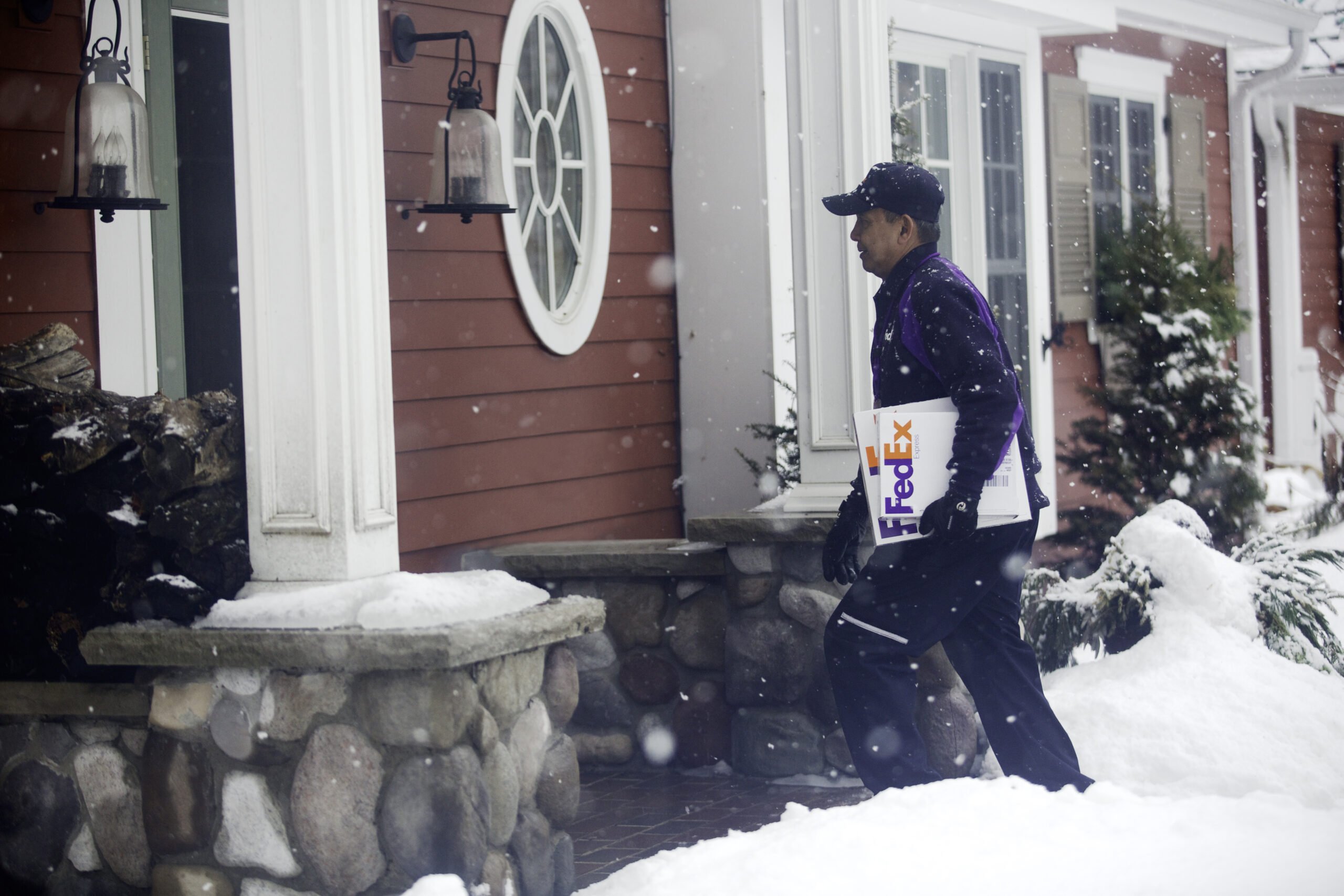
(Photo by FedEx)
See also: Blockchain technology emerges as key solution for EU deforestation compliance
Want to learn more about blockchain from industry leaders? Check out Blockchain Expo taking place in Amsterdam, California and London.
Explore other upcoming enterprise technology events and webinars powered by TechForge here.


