
“Too often we look at the imperfections of a strategy,” says David O’Gorman, “not at the overall impact.”
At Blockchain Expo Europe 2018 in Amsterdam this morning, the CEO of globally renowned not-for-profit WWF (Worldwide Fund for Nature) was speaking on the organisation’s early trials with blockchain technology in Fiji’s tuna fishing industry, as it looks to “new technologies” to help solve its sustainability objectives.
And set to cost some three trillion dollars, meeting those objectives certainly requires a renewed approach, but when it comes to the wider motivations of overhauling the food supply-chain process, the massive environmental impact is the most pressing priority.
According to O’Gorman, global food production over the next 40 years is set to equal the amount produced in the last 8,000, while 70 per cent of biodiversity loss over the last 40 years has been as a result of agricultural use.
But the WWF thinks it’s “near impossible” to change the way seven billion people consume food. Instead, the organisation says the answer lies in incentivising consumers to influence sustainable production themselves and supply-chain traceability is key to this.
It’s also the focus WWF’s Panda Labs initiative, which looks to emerging technologies to implement on social impact ventures, and while O’Gorman admits current progress is not yet at proof-of-concept stage (“we have a lot of work to do”), in partnership with a number of tech platforms including Consensus, he revealed the details of current progress with its blockchain pilot.
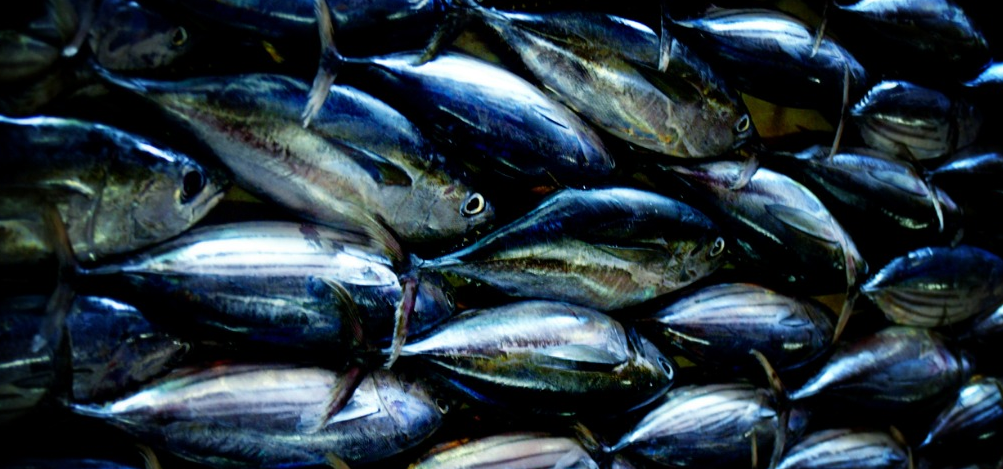
The Pacific tuna fishing industry represents the largest of its kind in the world, and accounting for some $26 billion per year in retail value while providing 90% of the region’s animal protein, it’s unsurprising that it’s leading to both a huge decline in fish stocks and regular breaches in sustainable fishing laws. “It’s an industry in crisis,” says O’Gorman.
By working with local fishing groups, WWF has been able to identify “pain points” where accountancy of stocks can go awry. Using RFID chips and QR codes attached to stock at catch which are scanned automatically by multiple sensors on the vessels, docks and at retail sites, the supply chain of the Pacific tuna industry can effectively be tracked and monitored from “bait to plate”, says O’Gorman.
This allows local authorities and organisations to pour through information on when and where the tuna was caught (such as whether it was caught in designated fishing areas), whether the catch was within a sustainable quota, how much it was traded for, among a wealth of valuable, and importantly traceable, information.
Asked how authorities and organisations could ensure people aren’t tampering with sensors and other hardware, O’Gorman said on the issue of validating data; “Garbage in, garbage out is not new to use, we’ve spent 30 years working on supply chains,” adding that other technologies such as AI (artificial intelligence) could be used to ensure the data is verifiable, such as the location of a fishing boat at the claimed time of catch.
O’Gorman calls the initiative a move towards “profit for purpose”, where blockchain serves a wider social and global purpose, rather than just a “network of private closed networks distributed across the globe”.
With more than 100 offices worldwide, the WWF is actively sourcing partners for projects to meet those initial sustainability goals across the world, and if you thought that initial three trillion dollars sound unrealistic, O’Gorman points to the six trillion dollars invested by Blackrock into businesses, some of which might be willing to “prove a positive social impact” with blockchain tech.
However, emphasising that there is still a distance to go, he adds: “At the moment it’s hard to find a blockchain solution the delivers the scale that’s needed.”

Interested in hearing leading global brands discuss subjects like this in person? Find out more at the Blockchain Expo World Series, Global, Europe and North America.


