
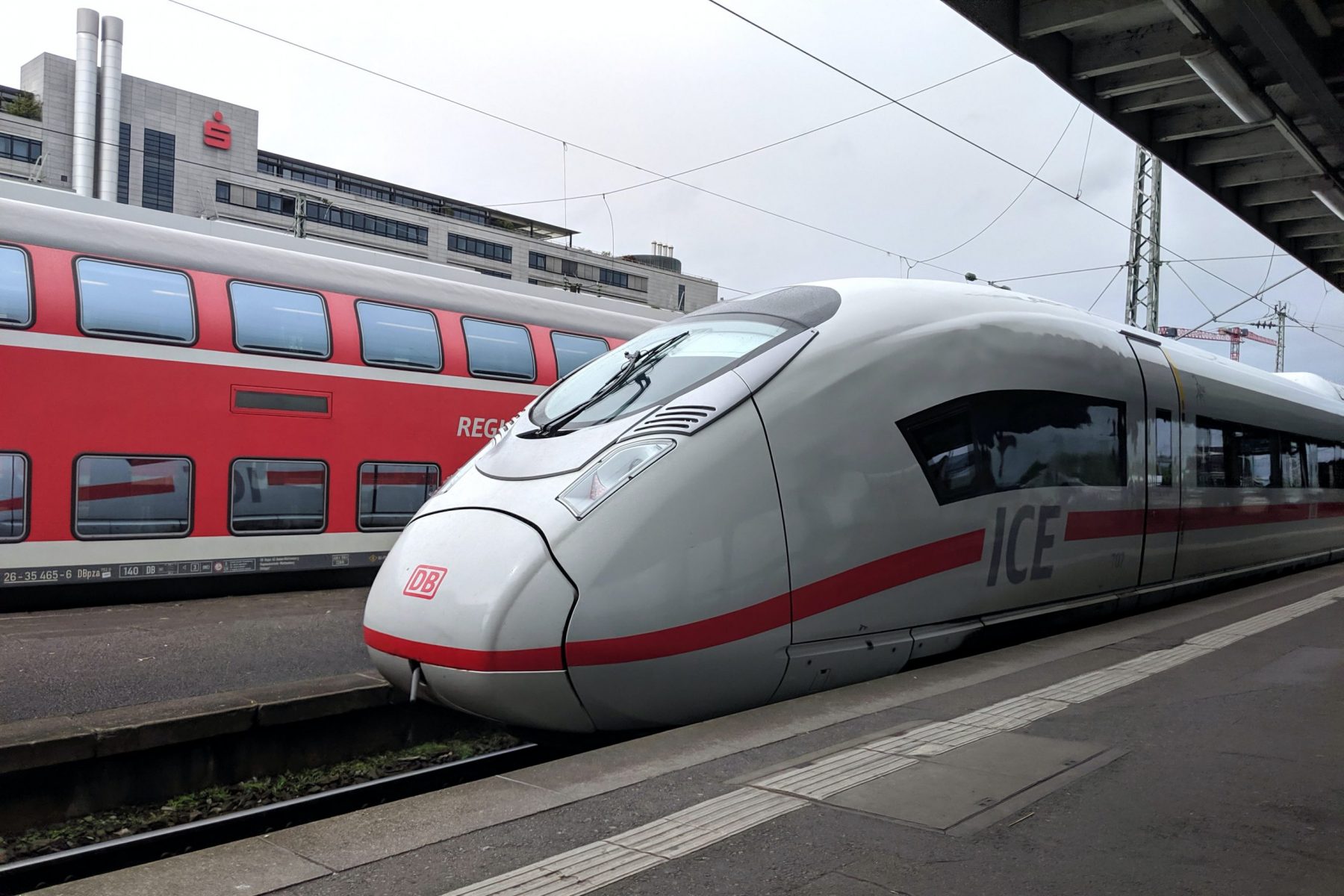
HS2, the controversial high speed railway being developed from London to Manchester, has begun to implement blockchain in parts of its procurement pipeline.
Major construction companies Costain, Skanska and Strabag took part in the trial, with oversight being provided by professional services firm Deloitte.
Deloitte’s blockchain lead, Alexander Marx, spoke at New Civil Engineer’s TechFest on December 2 about the benefits this will bring.
Explaining the reasoning for blockchain implementation, Marx said it provides three value cases: trust, transparency, and accountability.
He said: “Trust because you create a single version of the truth that everyone shares, and it’s verified. Transparency because you can share information across that network to encourage collaboration.
“And finally, accountability, because you can trace the business process from start to finish with clear and undeniable records of what’s been done when.”
Thanks to this complete confidence in the supply chain, smart contracts and payment automation can start to be used during HS2’s construction. In the trial, this reduced the total number of business processes for timesheets and administration from 24 to 11.
Another important rationale behind blockchain implementation is material origination. Every piece of inventory used in the rail network’s construction will be stored on the blockchain, keeping a record of where it was manufactured, how it was transported, and where it fits in the final structure.
This becomes particularly valuable with the growing adoption of digital twins, as all this information can be easily modelled and accessed in the construction’s digitised version.
HS2 has started using blockchain with one of its plant suppliers too, Lynch. This has enabled the project to reduce bottlenecks as information becomes universal and increasingly automated.
Marx said: “What we hope to do in the next few years is expand out in terms of its features and functions.
“It can be applied more broadly to other areas of timesheets and invoicing, while also looking at the rest of the process to move towards a one stop shop, essentially, for how you procure plant.”
He added that in the long run this could expand into other processes, such as different types of procurement or even how to capture carbon.
Looking to revamp your digital transformation strategy? Learn more about the in-person Digital Transformation Week North America taking place in Santa Clara, CA on 11-12 May 2022 and discover key strategies for making your digital efforts a success.


